
Photobiomodulation
Photobiomodulation, or PBM, is a form of light therapy that uses specific wavelengths of near infrared and red light to stimulate biological processes inside your cells. It has been researched for decades, it is FDA approved in the United States for a range of therapeutic applications, and the evidence for its effects on brain health specifically is building rapidly.
At The Togetherness Project, we include PBM in our suite of neurotherapy tools. This page explains what it is, how it works, what the research supports, and how it fits into a QEEG guided programme.
You might have heard people talk about red light therapy. Maybe you have seen panels advertised online, or heard someone mention infrared light in a wellness context. And you might have quietly wondered whether there is actual science behind it, or whether it is just another wellness trend dressed up in clinical sounding language.
The answer is more interesting than you might expect.
So what actually happens when light hits your cells?
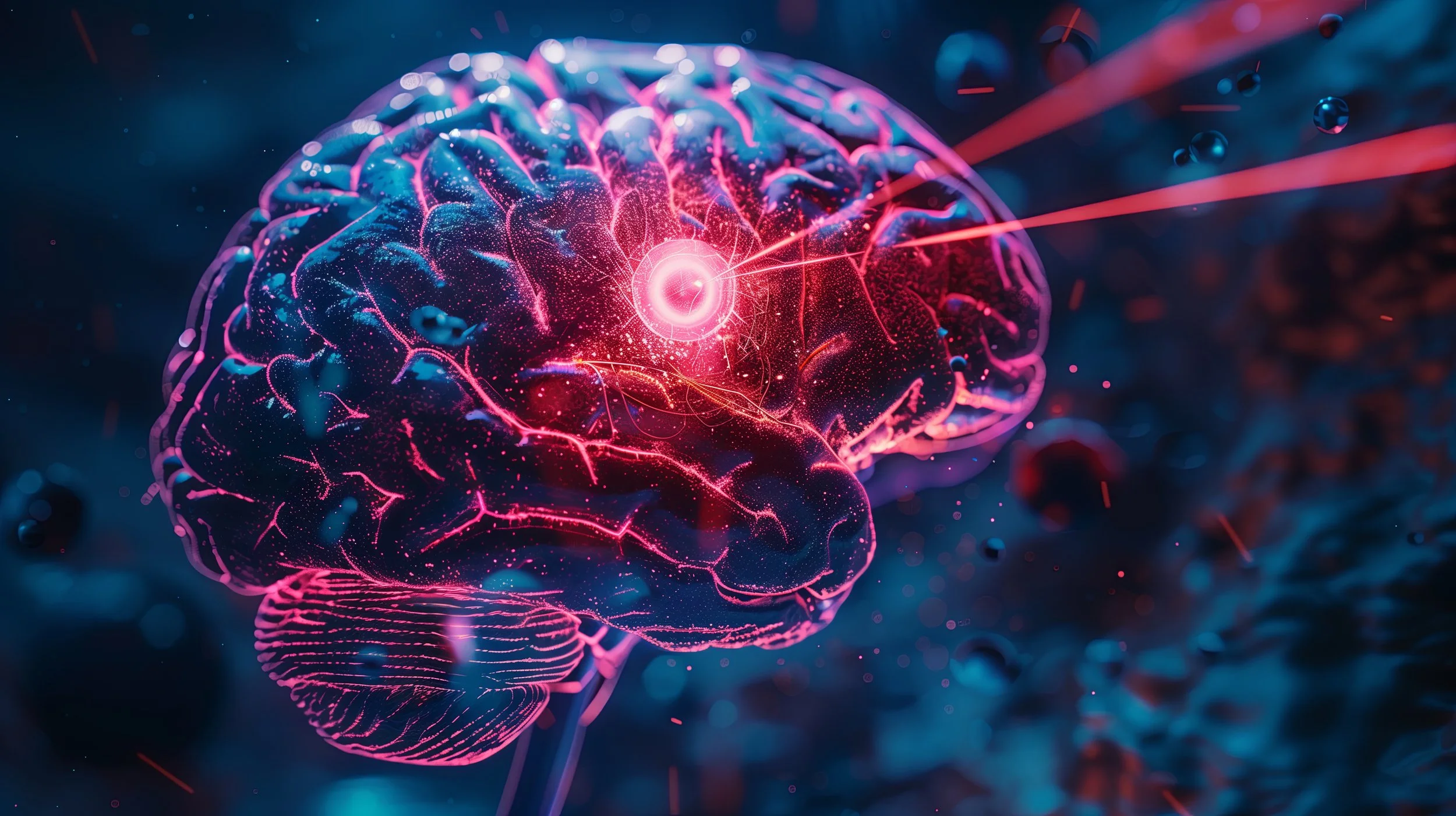
Here is the part that surprises most people: light at certain wavelengths is absorbed by specific structures inside your cells, in the same way that sunlight on your skin triggers vitamin D production. The target in this case is an enzyme called cytochrome c oxidase, which sits inside your mitochondria, the parts of your cells responsible for producing energy.
When this enzyme absorbs near infrared light, it responds. ATP production goes up. That is the currency your cells run on. Oxidative stress goes down. Blood flow improves. Inflammation is modulated. And in the brain specifically, neuroinflammation, which is a driver of many mental health presentations, can reduce.
This is not a theoretical mechanism. It has been replicated in laboratory settings, animal models, and increasingly in human clinical trials across a range of conditions.
The light does not do something to your brain. It gives your cells the conditions they need to do more of what they already know how to do. That distinction matters.
What wavelengths matter, and why?
Not all light is the same, and not all red light therapy devices are doing the same thing. Wavelength determines how deep the light penetrates and what it targets. The three wavelengths most supported by clinical research are:
808nm: Near infrared for brain and nervous system health
This is the most researched wavelength for brain applications. The 808nm range penetrates deep enough to reach cortical tissue transcranially (through the skull) and has the strongest evidence base for mood disorders, TBI recovery, and cognitive function. A 2023 systematic review and meta analysis confirmed 808nm as the most effective wavelength for improving depression symptoms across randomised controlled trials.
975nm: Deep infrared for mitochondrial function and inflammation
The 975nm wavelength penetrates further into tissue and is associated with enhanced mitochondrial function and reduction of deep inflammatory processes. It is less researched than 808nm for brain specific applications but has strong evidence for tissue recovery, chronic inflammation, and deep cellular repair.
638nm: Visible red for surface level support
This is the visible red light you can actually see. It works at a shallower depth and is associated with anti inflammatory effects, wound healing, circulation support, and skin health. In clinical PBM systems, it often serves as both a therapeutic wavelength and an aiming beam for the infrared modules.
1070nm: The emerging wavelength for cognition and neurodegeneration
You will increasingly see 1070nm mentioned in transcranial PBM research, and it is worth understanding what it offers and where it sits relative to the wavelengths above. At this range, the primary cellular target shifts slightly: rather than cytochrome c oxidase alone, 1070nm also modulates calcium ion channels, which play a significant role in cell signalling, neural excitability, and neuroplasticity. A 2023 clinical study published in the Journal of Biophotonics used a 1070nm helmet device for people with post COVID cognitive impairment and found significant improvements across multiple cognitive tests after four weeks of treatment. Earlier research from the Quietmind Foundation and Baylor Research Institute, one of the first published human trials using this wavelength, found rapid improvements in cognitive, motor, and behavioural symptoms in people with neurodegenerative conditions. Where 1070nm gets interesting clinically is its particular application in Alzheimer's disease, Parkinson's disease, and other neurodegenerative presentations, conditions where calcium dysregulation and mitochondrial decline are central to the pathophysiology. It is worth noting that current dosimetry research, including work from Harvard Medical School, suggests 810nm still outperforms 1070nm for transcranial penetration depth and mitochondrial activation under comparable power conditions, so the two wavelengths are better understood as complementary rather than competing. Emerging thinking in the field points toward multiwavelength approaches as likely optimal, with each wavelength addressing a distinct layer of the underlying biology.
Wavelength, power, dose, and application site all determine whether PBM produces a meaningful clinical effect. A cheap red light panel from a wellness retailer is not the same as a calibrated clinical grade laser system. The distinction matters if you are expecting therapeutic outcomes.
What conditions does the research support?
I want to be honest with you about where the research sits. This is a field that is developing quickly, and the evidence base is genuinely promising but not yet definitive across all presentations. Here is what we know so far:
Depression and mood disorders
Multiple clinical studies have shown reductions in depression symptoms following transcranial PBM, alongside improvements in cerebral blood flow. The mechanism makes neurobiological sense: depression is increasingly understood to involve mitochondrial dysfunction and neuroinflammation, and PBM targets both directly. Research published in Current Treatment Options in Psychiatry describes transcranial PBM as an innovative approach for reaching the altered neurometabolism that underlies major depressive disorder, particularly for people whose depression has not responded to standard treatments.
Traumatic brain injury and post concussive symptoms
This is one of the most exciting areas. A 2024 review in Cells found that PBM addresses multiple aspects of TBI pathophysiology simultaneously: axonal damage, mitochondrial dysfunction, oxidative stress, and persistent neuroinflammation. A 2025 randomised placebo controlled trial in the Journal of Neurotrauma found significant improvements in cognitive function, post concussion symptoms, and PTSD symptoms in people who received transcranial PBM compared to sham treatment.
For clients whose QEEG data shows the slow wave excess and network disruption typical of unresolved brain injury, PBM offers a way to target the underlying cellular environment rather than just the electrical patterns.
PTSD and trauma
Research published in Translational Psychiatry demonstrated that early PBM at 808nm reduced PTSD like responses by interfering with the consolidation of maladaptive fear memories. Separately, a 2024 review proposed that transcranial PBM may ease PTSD symptoms by modulating two key brain networks, the default mode network and the salience network, both of which are consistently dysregulated in trauma presentations and visible in QEEG assessments.
Anxiety, ADHD, cognitive function and sleep
The broader research base also covers improvements in executive function, attentional control, memory, and neuroinflammation reduction. Given how frequently these domains overlap with the presentations I work with, this is an area I will be watching closely and tracking in our own clinical data.
Where the evidence is promising but early, I will say so rather than overstate it. Honest communication about what we know and what we are still learning is part of how I work.
How does PBM fit into neurotherapy at The Togetherness Project?
Every decision about your treatment at The Togetherness Project starts with your QEEG and ERP assessment data. PBM is not something we offer as a standalone wellness treatment; it is integrated into a broader protocol that is guided by your individual brain profile.
For clients whose data shows patterns consistent with high inflammatory load, mitochondrial compromise, TBI related changes, or cortical hypoactivation, PBM will be considered alongside our existing modalities: tDCS, tACS, pEMF, tRNS and tVNS as clinically indicated.
Some clients will benefit from it. Others will not need it. That distinction is always made on the basis of what the data shows, not a one size fits all approach.
The equipment we use
The consumer market for red light therapy is saturated with devices that vary enormously in quality, power, and clinical relevance. A cheap LED panel from a wellness retailer is not the same as a calibrated clinical laser system, and the difference matters when you are expecting therapeutic outcomes.
We use portable, multiwavelength clinical grade laser systems that deliver 808nm, 975nm and 638nm in continuous wave or pulsed modes, with the pulse frequency tunable to biological rhythms. Pulsed delivery is increasingly supported in the transcranial PBM literature as a way to prevent overstimulation and optimise dose response. The systems we use are FDA approved in the United States. If you would like to know more about the specific devices and why we chose them, we are happy to talk it through at your consultation.
If you are already working with us through a neurotherapy programme, your current protocol does not change unless your assessment data and clinical presentation suggest PBM would add value. We will discuss that with you directly.
If you are new to The Togetherness Project and have a history that has not responded fully to standard approaches, including treatment resistant depression, a history of head injury, complex trauma, or presentations where fatigue and inflammation are significant factors, it is worth having a chat about whether a QEEG guided programme that includes PBM is relevant for you.
We offer QEEG brain mapping assessments in Hawthorn (Melbourne) and Fremantle (Perth). That assessment is where every protocol decision starts.
Is PBM right for you?