Primitive Reflexes and Integration: Understanding Your Child’s Development
Why does handwriting take so much effort? Why is sitting comfortably at a desk difficult? Why do some movements seem harder for your child than for others?
These questions can lead families to explore primitive reflexes: automatic movement responses that play an important role in early development.
Understanding reflexes can add useful information to a child’s developmental picture. The key is to consider them alongside the child’s history, strengths, challenges and everyday experiences.
What are primitive reflexes?
Primitive reflexes are automatic responses that emerge early in life. A baby does not have to think about making these movements.
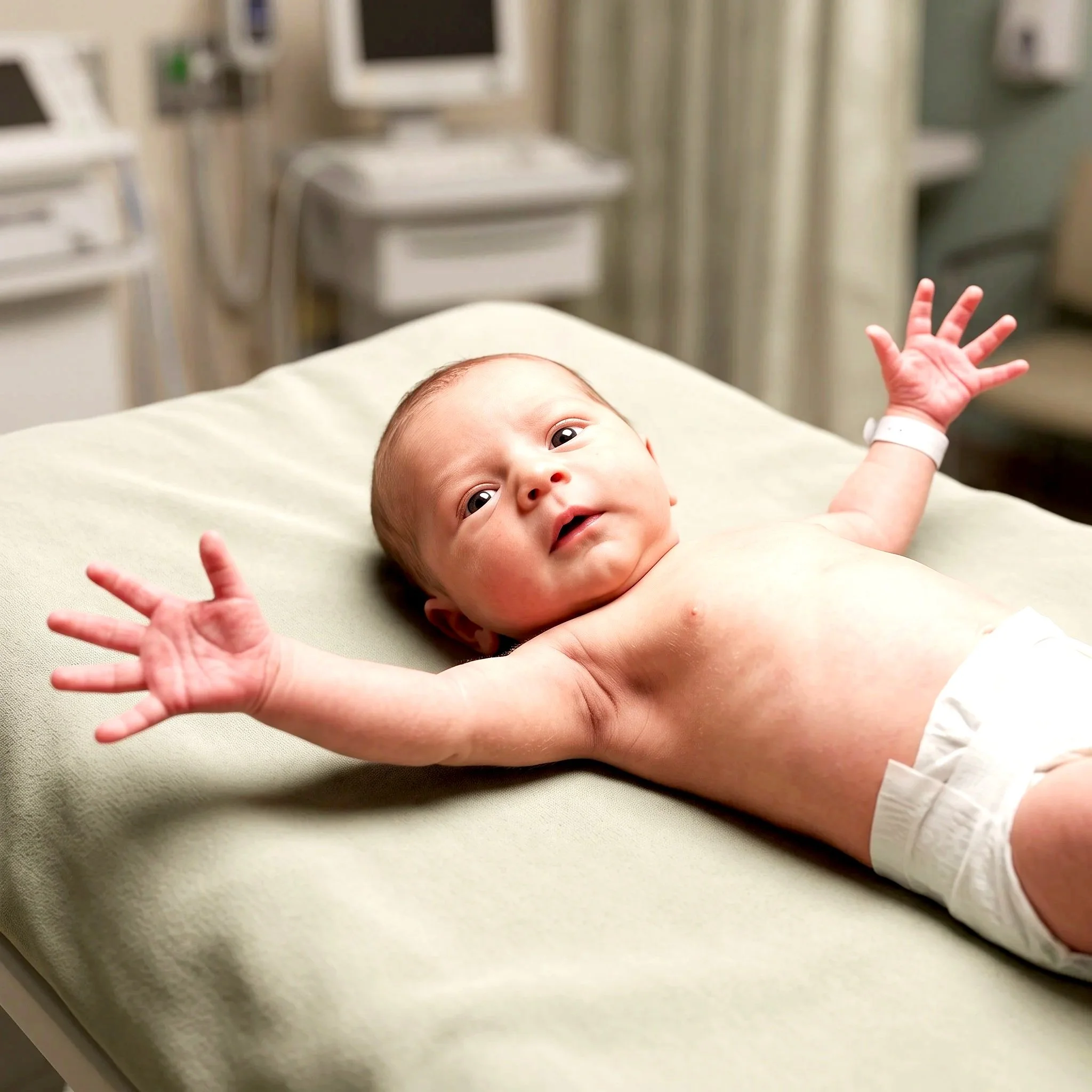
You may have seen a newborn turn towards a touch on their cheek, close their fingers around yours, or throw their arms out after a sudden change in position. These are examples of the rooting, palmar grasp and Moro reflexes.
Some reflexes support feeding; others are part of the newborn’s early movement responses. As the nervous system matures, many become less prominent and voluntary movement develops. The timing varies between reflexes and between babies. The American Academy of Pediatrics explains these early responses in its guide to newborn reflexes.
What does “integration”
mean?
Integration is a term used to describe an early reflex becoming less readily triggered as more mature movement control develops.
For example, a newborn’s hand may automatically close when their palm is touched. Over time, the child develops more deliberate control over reaching, grasping and releasing.
Integration does not mean that every automatic response disappears. It describes a developmental change in how particular early movement patterns are expressed.
You may also hear the term retained primitive reflex. This refers to a reflex response that remains evident beyond the stage when it would usually become less prominent.
A retained reflex is an observation within an assessment. It is not, by itself, a diagnosis or a measure of a child’s ability.
Why might reflexes be considered in an assessment?
When a child finds movement or everyday tasks difficult, a practitioner may consider reflex responses alongside other aspects of development.
For example, assessment might explore:
Hand skills used for drawing, handwriting or dressing.
Balance and coordination during play.
Posture and comfort when sitting.
The ability to coordinate different parts of the body.
Some research has found associations between persisting reflex responses and motor or learning difficulties. However, an association does not establish that a reflex caused the difficulty.
This is why a broader assessment matters. Handwriting difficulties, for example, may involve hand strength, coordination, vision, fatigue, task demands or several factors together. A reflex observation cannot answer all of those questions.
What is reflex integration therapy?
Reflex integration therapy is a term used for approaches intended to reduce persisting reflex responses. These may include repeated movement patterns, positioning activities or sensory input.
It is helpful to distinguish the natural developmental process of integration from a therapy programme designed to influence it. Understanding that reflexes change during development does not, on its own, establish that a particular exercise programme is effective.
Research into these programmes is still developing. Some studies report improvements, but there is not enough consistent evidence to promise that reflex exercises will improve attention, emotional regulation or academic performance.
For families, this means asking: How will this approach help my child with the activities that matter to them?
What should progress look like?
A change in a reflex score may be one piece of information. Everyday improvements give that information practical meaning.
Useful goals might include:
Getting dressed with less assistance.
Drawing or writing with greater comfort.
Joining a playground game more confidently.
Fewer emotional meltdowns.
Managing a classroom task with less fatigue.
Goals should be specific to the child and agreed with the family. A practitioner should explain how progress will be measured, when the plan will be reviewed, and what will happen if it is not helping.
Your child’s experience also matters. Activities should be manageable, respectful and adapted to their abilities. Pain, distress or reluctance should prompt a pause and a review of the approach.
Looking at the whole child
Movement, learning and emotional wellbeing are influenced by many interacting factors. Sleep, health, sensory preferences, relationships and the environment all deserve consideration.
A child who struggles with a task needs curiosity and support. Understanding what makes that task difficult is more useful than assuming a single underlying explanation.
Reflex integration should not be presented as a cure for autism, ADHD, dyslexia or anxiety. Reflex observations also cannot diagnose these conditions.
Support should build on a child’s strengths and help them participate in ways that are comfortable and meaningful to them.
Where can families start?
If you have concerns about your child’s movement or development, speak with your qualified allied health professional. New difficulties or a loss of previously acquired skills warrant medical review.
You do not need to test reflexes at home before seeking help. Describing what you notice in daily life is a useful starting point.
If a practitioner recommends reflex integration work, ask what the assessment showed, what evidence supports the proposed approach, and which everyday goals it will address.
Primitive reflexes can contribute to our understanding of development. Their greatest value comes when observations are interpreted carefully and connected to the child’s life.
The aim is meaningful progress: greater comfort, confidence and participation in the things your child enjoys and needs to do.
This article provides general information and does not replace individual medical or developmental advice.